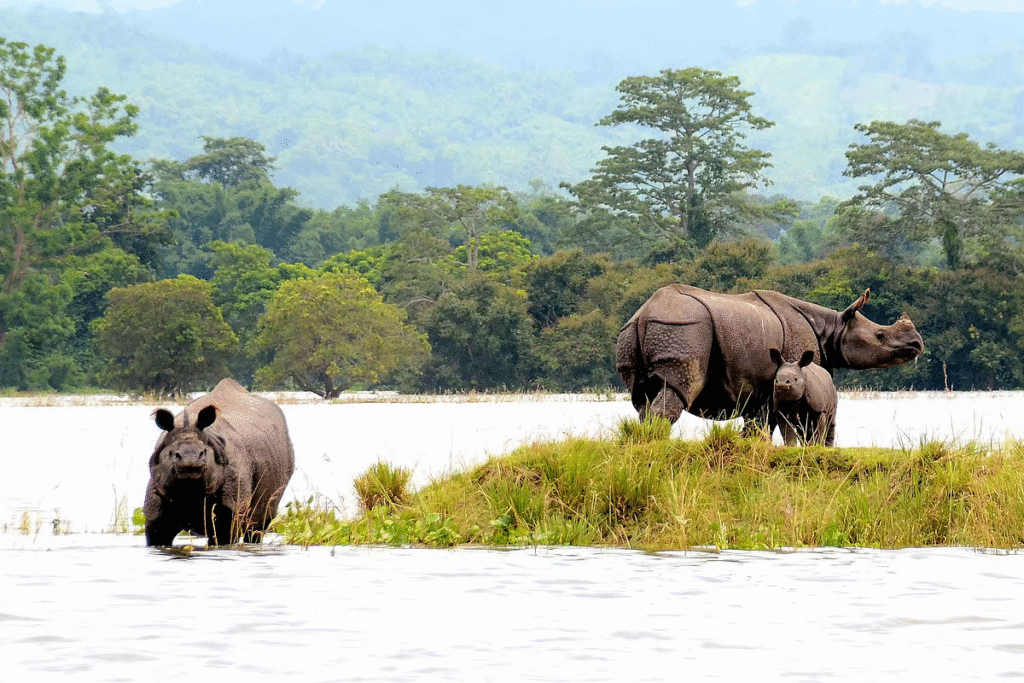
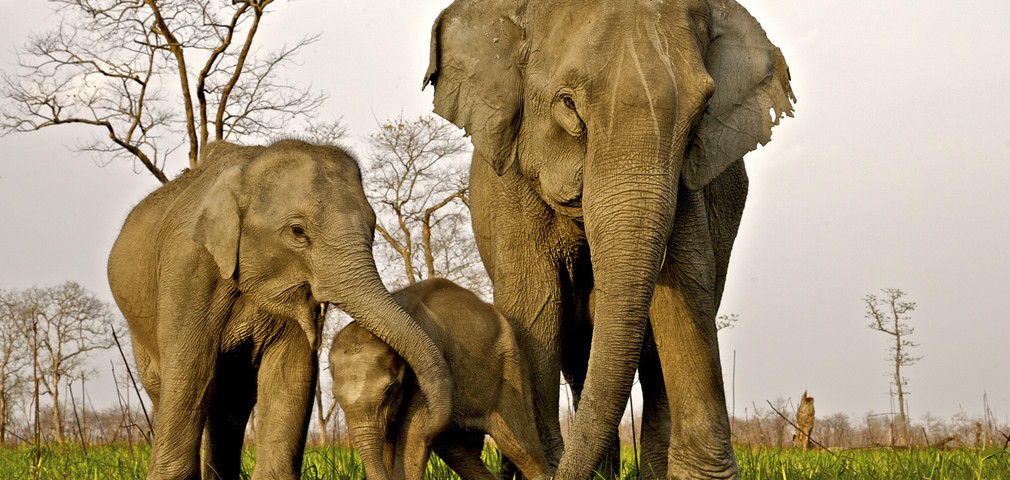
Assam, located in northeastern India, is a land rich in history, culture, and natural beauty. Its history dates back to ancient times with early settlements evidenced since the Stone Age and the flourishing of the Kamarupa kingdom, which played a significant role in the region’s culture and polity. Assam’s people represent a vibrant mix of ethnicities and cultures, shaped by influences from Indo-Burmese, Mongolian, and Aryan origins, making it a melting pot of traditions. The culture is known for its festivals like Bihu, traditional dances, rich crafts, and the legacy of saints like Srimanta Sankardeva. Assam’s diverse flora includes dense tropical and deciduous forests, rich bamboo groves, and a remarkable variety of orchids, with several species found nowhere else. The state is famed for its fauna, including the iconic one-horned Indian rhinoceros, Bengal tiger, Asian elephant, hoolock gibbon, and numerous bird species, safeguarded in national parks like Kaziranga and Manas, which are UNESCO World Heritage sites. Important places in Assam encompass the historic city of Guwahati, the Kamakhya Temple—a revered Shakti Peeth—and natural marvels such as the Brahmaputra River and its rich green landscapes. All these elements together create Assam’s unique identity as a culturally vibrant, ecologically rich, and historically significant state in India’s northeast.

Bihu Festival: The most prominent and widely celebrated festival, Bihu occurs thrice a year—Bohag (Rongali) Bihu in April marking the Assamese New Year and spring harvest, Magh Bihu in January celebrating the post-harvest season with feasts and bonfires, and Kati Bihu in October for protecting crops and praying for good yields. It features energetic Bihu dances, folk songs, and traditional feasts enjoyed by all communities.
Bihu Festival: The most prominent and widely celebrated festival, Bihu occurs thrice a year—Bohag (Rongali) Bihu in April marking the Assamese New Year and spring harvest, Magh Bihu in January celebrating the post-harvest season with feasts and bonfires, and Kati Bihu in October for protecting crops and praying for good yields. It features energetic Bihu dances, folk songs, and traditional feasts enjoyed by all communities.